So, you’ve decided to hop on the Mediterranean diet train and you’re wondering, “Can I eat watermelon on this new eating plan?” It’s a great question, because let’s face it, watermelon is the perfect, refreshing summer snack! As you know, the Mediterranean diet is all about fresh, unprocessed foods and it surely helps in maintaining your overall health for you and your family.
Don’t worry, you’ll definitely get your answer in this article! JD, a devoted family man who is a keen advocate of the Mediterranean diet, will take you on a journey to explore the benefits and nuances of this lifestyle. He’ll also highlight ways to incorporate watermelon and other sumptuous meals into your Mediterranean diet. Remember, it’s not just about being present for your family, it’s also about being able to share good, quality meals together! Get ready to uncover more in the upcoming article.
Can You Eat Watermelon On The Mediterranean Diet?
Understanding the Mediterranean Diet
Definition and Origin of the Mediterranean Diet
The Mediterranean Diet is more than a mere eating plan—it’s a lifestyle that originated from the traditional eating habits of the people living around the Mediterranean Sea. Known for its rich flavors, the diet primarily comprises fruits, vegetables, whole grains, legumes, and olive oil, with healthy servings of fish and other lean proteins.
Key Components of the Mediterranean Diet
Key ingredients of the Mediterranean Diet include fresh fruits and vegetables, nuts and seeds, legumes, seafood, and oils, particularly olive oil, renowned for its heart-healthy properties. Refined sugars, unhealthy fats, and processed foods are limited, reinforcing a focus on fresh, whole foods.
Health Benefits of the Mediterranean Diet
Numerous research studies suggest that the Mediterranean Diet may offer a myriad of health benefits, including heart health, weight loss and management, type 2 diabetes control, and better mental health. Its emphasis on fruits and vegetables also ensures a high fiber intake, supporting overall digestive health.
Exploring Watermelon
Nutritional Value of Watermelon
Watermelon, a summer staple, apart from being totally refreshing, is packed with nutrients. It is high in vitamins A and C, and a good source of potassium, essential for heart and muscle function. It also contains lycopene, a powerful antioxidant, linked with many health benefits.
Health Benefits of Watermelon
Watermelon has been found to improve hydration, support heart health, and reduce inflammation and oxidative stress, thanks to its water content and the diverse vitamins and antioxidants it contains. It may also help with weight loss because of its low calorie and high water content.
Role of Fruits in Mediterranean Diet
Importance of Fruits in the Mediterranean Diet
In the Mediterranean Diet, fruits are considered key components, thanks to their high content of vitamins, antioxidants, and dietary fiber, which contribute to general well-being and disease prevention.
Most Consumed Fruits in the Mediterranean Diet
Citrus fruits, apples, berries, peaches, melons, and grapes are some of the most commonly consumed fruits in the Mediterranean Diet. And yes, watermelon also finds a cherished spot here.
Watermelon on the Mediterranean Diet
Inclusion of Watermelon in the Mediterranean Diet
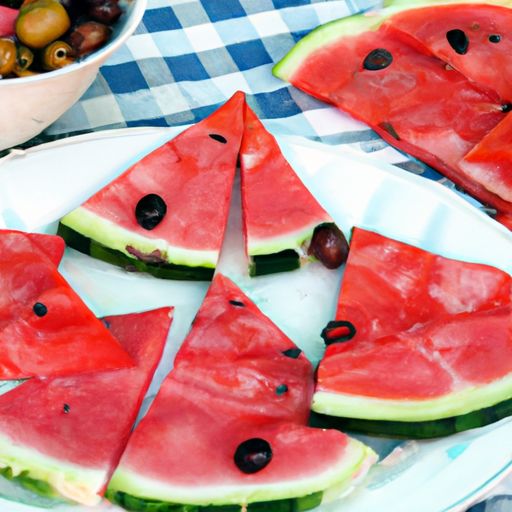
Embracing the Mediterranean lifestyle, one might wonder about the place of watermelon. Indeed, it is widely incorporated into the diet. It’s often savored as a refreshing snack during the hot Mediterranean summer and added to salads and desserts for a delicious burst of flavor and hydration.
Nutrient Contribution of Watermelon to the Mediterranean Diet
Watermelon aligns beautifully with the nutrient values of the Mediterranean diet, primarily contributing to hydration, while also providing key vitamins and minerals, such as potassium, vitamin C, and lycopene, supporting heart health.
Delicious Watermelon Recipes in Mediterranean Style
Refreshing Watermelon Salad
A simple, refreshing watermelon salad can capture the essence of summer, with juicy watermelon cubes paired with fresh mint, feta cheese, olives, and a zingy lemon vinaigrette.
Hydrating Watermelon Smoothie
A quick watermelon smoothie combined with Greek yogurt, a splash of lime, and a pinch of cinnamon offers a fantastic way to start your day, the Mediterranean way.
Mediterranean Watermelon Pizza
For a fun twist, you can create a beautiful Mediterranean Watermelon Pizza, simply by slicing a round piece of watermelon, topping it with Greek yogurt, fresh berries, and a drizzle of honey. This creative dish can be a big hit especially with kids!
Sharing Quality Food with Family: Mediterranean Diet and Watermelon
Importance of Family Meal in the Mediterranean Culture
The Mediterranean lifestyle emphasizes the importance of sharing meals with family and friends. It’s about taking the time to appreciate not just the delicious flavors but also to savor the joy of communal eating as a way to nurture body and soul.
Watermelon: A Fruit for Family Sharing
Watermelon, with its generous size and refreshing character, is a perfect fruit for sharing. It naturally fosters the spirit of sharing and community central to the Mediterranean culture.
Impacts on Health: Watermelon in Mediterranean Diet
Supporting Heart Health
By providing key nutrients like lycopene and vitamin C, watermelon may support heart health, one of the fundamental benefits associated with the Mediterranean Diet.
Promoting Good Hydration
Watermelon, being made up of 92% water, naturally promotes good hydration, essential for all bodily functions.
Boosting Eye Health
Watermelon’s vitamin A content can contribute to maintaining healthy eyes, a benefit that’s often overlooked.
Maintaining Long-Term Health with the Mediterranean Diet
Role of Watermelon in Long-Term Health Goals
Adding watermelon to your Mediterranean Diet can be a step towards your long-term health goals. The fruit’s nutritional profile supports heart health, hydration, weight management, and overall wellness.
Achieving Active and Healthy Lifestyle Through Mediterranean Diet
The Mediterranean Diet, loved for its delicious flavors and varied ingredients, including watermelon, can contribute to an active and healthy lifestyle.
Tricky Parts About Watermelon in Mediterranean Diet
Potential Concerns of Consuming Watermelon
Watermelon, while healthy, is high in natural sugars and should be consumed in moderation, especially by those who are diabetic or pre-diabetic.
Overcoming Watermelon Myths
There is a popular myth that consuming watermelon can lead to weight gain because of its sugar content. In truth, watermelon, being low in calories and high in water, is generally a good choice for weight management if eaten in moderate proportions.
Conclusion: Can You Eat Watermelon On The Mediterranean Diet?
Summarizing the Role of Watermelon in the Mediterranean Diet
Yes, you can indeed enjoy watermelon on the Mediterranean Diet. This refreshing staple fits perfectly within the diet’s emphasis on enjoying fresh, whole foods and contributes key nutrients while delighting the taste buds.
Final Reminder for Eating Watermelon on the Mediterranean Diet
In conclusion, the Mediterranean lifestyle isn’t just about the food you eat, it’s about eating with love, sharing with family, and appreciating the journey to wellness. And what could symbolize this better than a juicy, inviting slice of watermelon?
So, go ahead and enjoy your watermelon, keeping in mind that, as with everything in the Mediterranean Diet, it’s all about balance and mindful, joyful consumption.
Leave a Reply