Imagine a meal that not only enthralls your taste buds but also serves as a beacon of health and nourishment; that is precisely what the Mediterranean Greek Salad offers. Steeped in rich cultural heritage, the Mediterranean Greek Salad is an iconic dish that epitomizes the philosophies of the Mediterranean Diet: fresh ingredients, indulgence in nutritious elements, and a celebration of taste.
This guide will be your perfect companion in the art of preparing the charming Mediterranean Greek Salad. From meticulously chosen ingredients and their precise measurements, to clear-cut cooking and preparation instructions, and even thoughtful options for ingredient substitutions – your journey into preparing this delectable dish is meticulously mapped out. This article, set to immerse you in the essence of Mediterranean culinary delights, ensures you can effortlessly recreate this healthy and scrumptious salad, enough to satiate four adults with ease.
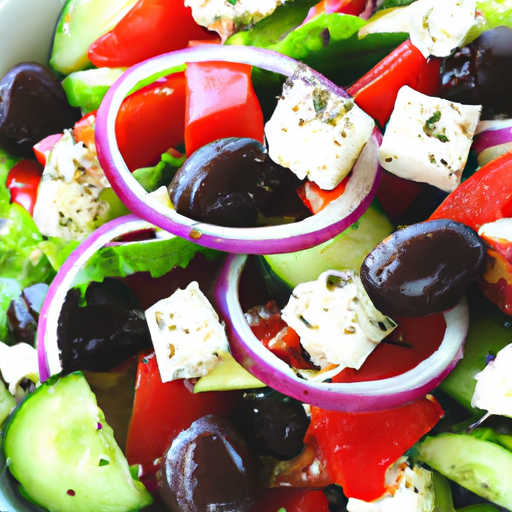
Understanding the Mediterranean Greek Salad
The Mediterranean Greek Salad is an iconic dish that has earned its place in the culinary world, not just for its delightful taste, but because it perfectly embodies the principles of the Mediterranean diet.
Context of the Mediterranean Greek Salad in the Mediterranean diet
Predominantly derived from countries bordering the Mediterranean Sea, the Mediterranean diet emphasizes the intake of fresh and wholesome foods. The Greek Salad, with its mix of sharp, piquant, and crisp flavors, fits perfectly within this dietary philosophy. It allows you to enjoy a meal that bursts with vibrant tastes without straying from a healthy diet.
Health Benefits of the Mediterranean Greek Salad
Greek Salad is a powerhouse of nutrition. Filled with fresh vegetables, healthy fats from olives and olive oil, and protein-rich feta cheese, it’s a complete meal in itself. It’s high in dietary fiber, which aids digestion, and antioxidants which contribute to overall health and wellness.
Popular variations of the Mediterranean Greek Salad
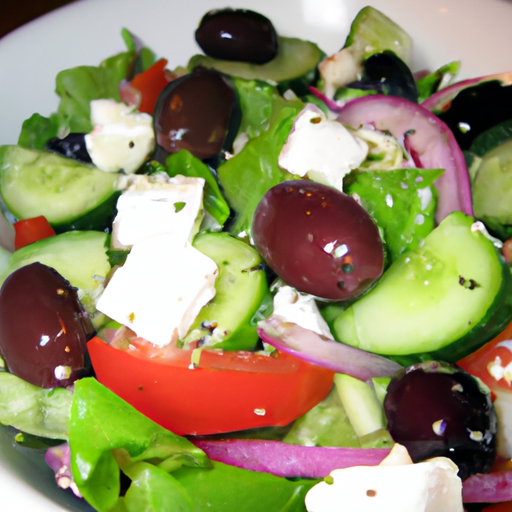
The traditional Greek Salad primarily includes tomatoes, cucumbers, onions, bell peppers, black olives, feta cheese and a light dressing of olive oil, oregano and lemon juice. However, there are variations where you might find additional ingredients like capers, lettuce, or even a boiled egg.
Mediterranean Greek Salad Ingredients
Now that you are familiar with the Greek Salad and its place in the Mediterranean diet, let’s delve into what you will need to prepare this refreshing and nutritious dish.
Detailed list of ingredients
You will need fresh and ripe tomatoes, cucumbers, red onions, green bell peppers, black olives and feta cheese. For the dressing, pick up some extra-virgin olive oil, a squeeze of fresh lemon juice, dried oregano, and optionally salt and black pepper to taste.
Exact measurements for each ingredient for 4 servings
For four adult-sized servings, you’ll need: 4 large ripe tomatoes, 2 cucumbers, 1 large red onion, 2 green bell peppers, 1 cup of black olives, 200 grams of feta cheese. For the dressing: ½ cup of extra-virgin olive oil, the juice of 1 lemon, 2 teaspoons of dried oregano, and salt and black pepper to taste.
Choosing the best quality ingredients
Quality matters when it comes to preparing a Greek Salad. Choose the freshest vegetables you can find, ensure your olives are packed in brine for best flavor, and opt for a block of feta cheese over the pre-crumbled variety.

Preparation of the Mediterranean Greek Salad
With the ingredients ready, let’s walk through the relatively simple process of creating your Greek Salad.
Step-by-step cooking and preparation instructions
Begin by washing and drying all your veggies. Dice the tomatoes, cucumbers, and bell peppers into bite-sized pieces and thinly slice the red onion. Mix them in a large bowl. Scatter the olives evenly across the veggies and crumble the feta cheese on top.
Time required for preparation and cooking
Making Greek Salad is a quick process it should take about 15-20 minutes.
Detailed instructions for dressing preparation
To prepare the dressing, combine the extra-virgin olive oil, lemon juice, dried oregano, and salt and pepper in a small bowl. Whisk them briskly to mix well. Drizzle the dressing over the salad just before serving to keep the veggies crisp.
Optional ingredients and substitutions
Feel free to customize your Greek Salad according to your preferences or dietary needs.
Dietary options and substitutions
For a vegan option, you can skip feta cheese or substitute it with a vegan variety. If olives are not to your taste, capers can be a great alternative, providing a similar salty bite.
Seasonal ingredient options
Depending on the season, consider adding fresh herbs or seasonal veggies. For instance, some fresh mint or basil could add another layer of flavour in the summer months.
Alternative dressings for Greek Salad
If you’d like to switch up the dressing, consider a Greek yogurt or tahini-based dressing for a creamy twist.
Serving Suggestions
The great thing about Greek Salad is how versatile it is.
Ideal dishes to pair with the Greek Salad
Perfect as a standalone meal, it’s also an excellent accompaniment to dishes like grilled chicken, fish, or even a hearty lasagna.
Serving temperature tips
The Greek Salad tastes best when served chilled, making it perfect for a summer meal.
Presentation and garnishing recommendations
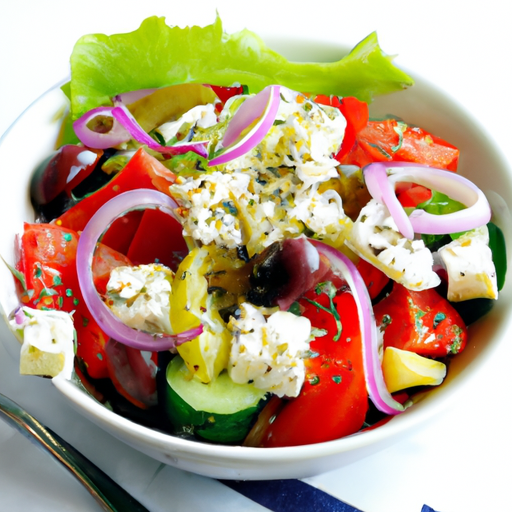
Presentation is everything when serving a Greek Salad. Serve in a clear salad bowl to highlight its vibrant colors, and garnish with a fresh sprig of oregano if available.
Storing the Mediterranean Greek Salad
If you have any leftovers, Greek Salad can be stored under certain conditions.
Best practices for storage
Store the salad in an airtight container in the refrigerator for the best freshness.
Ideal storage duration for the salad
The Greek Salad can last up to 2 days in the fridge, but remember to add the dressing only when you’re about to eat it.
Reviving the Greek Salad for later use
To revive the Greek Salad for later use, you can drizzle it with a bit of olive oil and lemon juice.
Common Mistakes in Making Greek Salad
Even though preparing the Greek Salad is straightforward, there are a few common mistakes to avoid.
Facing and resolving issues in recipes
One common issue is overdoing it with the dressing, which can make the salad too soggy. Remember to use your dressing sparingly and always add it just before serving.
Avoiding common mistakes in preparation
Another issue can be the cutting of the veggies. The salad tastes best when the tomatoes, cucumbers and bell peppers are diced into bite-sized pieces instead of thin slices.
Nutritional Information of the Greek Salad
Greek Salad is a nutritionally balanced dish.
Nutritional breakdown of the Greek Salad
Greek Salad is naturally low in calories and high in fiber. The black olives and olive oil provide healthy fats, and the cheese adds a good amount of protein.
Understanding the health implications of the ingredients used
The vegetables provide a wealth of vitamins and minerals while keeping the calorie count low. The feta cheese and olives not only add to the flavor but also provide a good amount of heart-healthy fats.
Benefits of Greek Salad in the Diet
Including Greek Salad in your diet can have numerous benefits.
Reasons to regularly include Greek Salad in the diet
Regular consumption of Greek Salad is a delicious way to meet your daily vegetable quota while indulging in a meal that’s flavorful and satisfying.
The salad’s contribution to weight management
Given its high fiber and water content, Greek Salad can make you feel satisfied without loading up on calories, making it an excellent choice for weight management.
Conclusion
To recap, the Greek Salad is a versatile, delicious and nutritious meal option that captures the essence of the Mediterranean diet. It’s simple to prepare, versatile and can be customized according to preference and dietary needs. So why not don your apron, slip into the kitchen, and treat yourself to a freshly made Greek Salad today?
Leave a Reply